
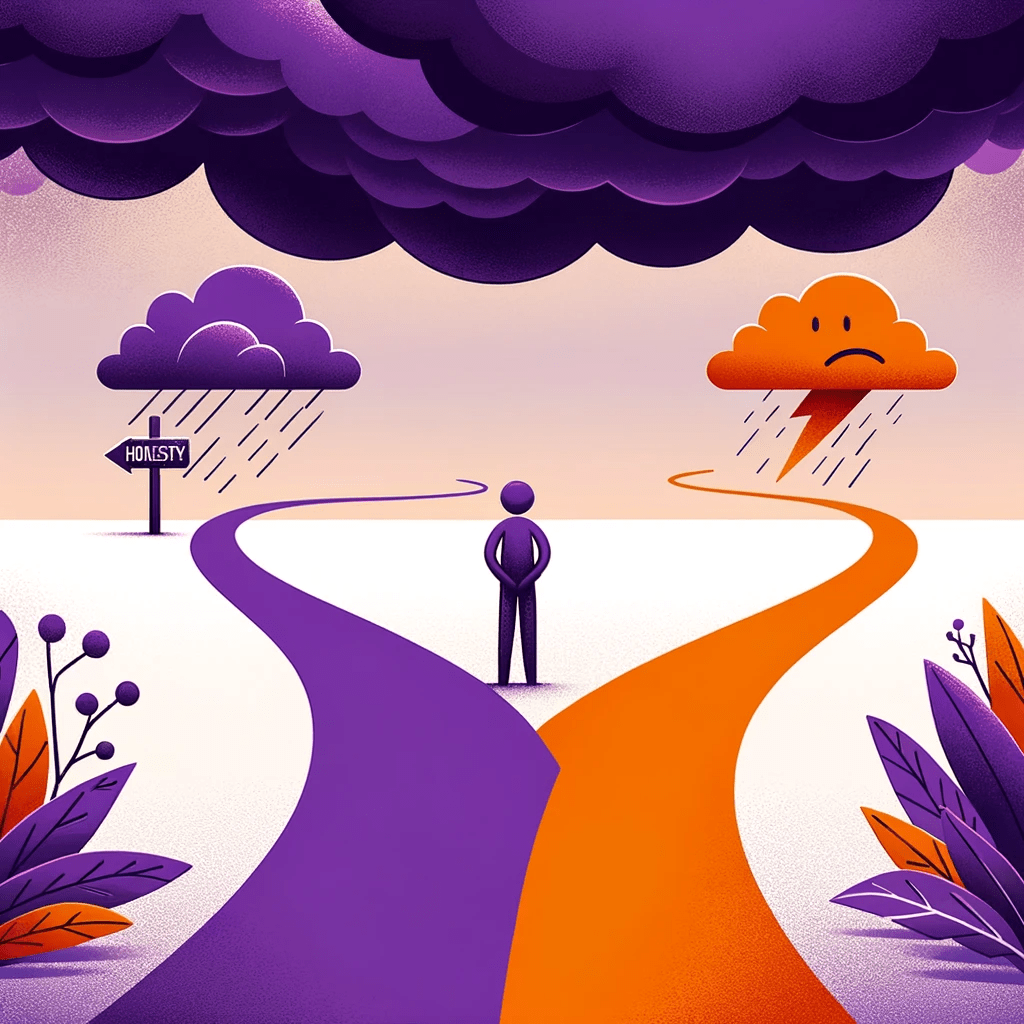
Introduction In a world brimming with information and diverse perspectives, the ability to discern truth from falsehood is more crucial than ever. The concepts of honesty and lying are not merely about factual accuracy but are deeply intertwined with the core of our social interactions and personal integrity. This article aims to unpack these concepts, explore their dynamics, and understand their profound impact on our lives.
Defining Honesty Honesty is often lauded as one of the most esteemed virtues in society. It’s the act of being truthful, not just in speech but also in conduct. However, honesty transcends the simplicity of not telling lies; it is about being authentic and congruent with one’s values and beliefs. It requires self-awareness, as one must recognize their true intentions and feelings before expressing them to others. Honesty promotes transparency and trust, serving as the foundation for strong and meaningful relationships.
But honesty also has its complexities. It’s not always black and white. There are times when being too forthright can be hurtful or inappropriate. Therefore, understanding the nuance of honesty involves discerning when and how to share the truth, ensuring that it is done with tact and consideration for others’ feelings and circumstances.
Defining Lying On the flip side, lying is often characterized as a deliberate act of deception. It can take many forms: from blatant falsehoods to subtle omissions or the twisting of facts. While some lies are told with malicious intent, others are borne out of a desire to protect oneself or others from harm. However, the act of lying creates a breach of trust that can be difficult to repair.
The dynamics of lying are as complex as those of honesty. Lying can be a defense mechanism, a tool for survival, or a pathological behavior. It can provide short-term relief or advantages but often at the cost of long-term trust and credibility. Understanding why people lie is as important as recognizing the act itself, as it helps in addressing the underlying issues that lead to dishonesty.
Comparative Analysis
The difference between being honest and lying can be quite clear, but in real life, there are many shades of gray. Sometimes, being truthful clashes with the practicalities of everyday life. People may be tempted to bend the truth for social reasons or personal gain. Honesty requires courage and vulnerability because it means taking risks to maintain integrity. On the other hand, lying involves fear and calculation as individuals try to navigate situations without revealing their true thoughts or intentions.
It is important to understand these dynamics, especially in contexts where trust is crucial, such as personal relationships, business dealings, and governance. When we understand the motivations and consequences of honesty and lying, we can create environments that value and uphold the truth.
Conclusion As we navigate through interactions with others and ourselves, the line between honesty and lying will invariably blur. It is our responsibility to strive for truthfulness while being mindful of the complexities that come with it. By fostering a deeper understanding of these concepts, we can create a culture that values integrity and encourages transparency, ultimately leading to a more trusting and authentic society.
 Intellectually Mindful Workshops